- Home
- Industries
- Healthcare
- Manufacturers & Distributors
- Medical Devices
Loading...
Unique Device Identification for Medical Devices
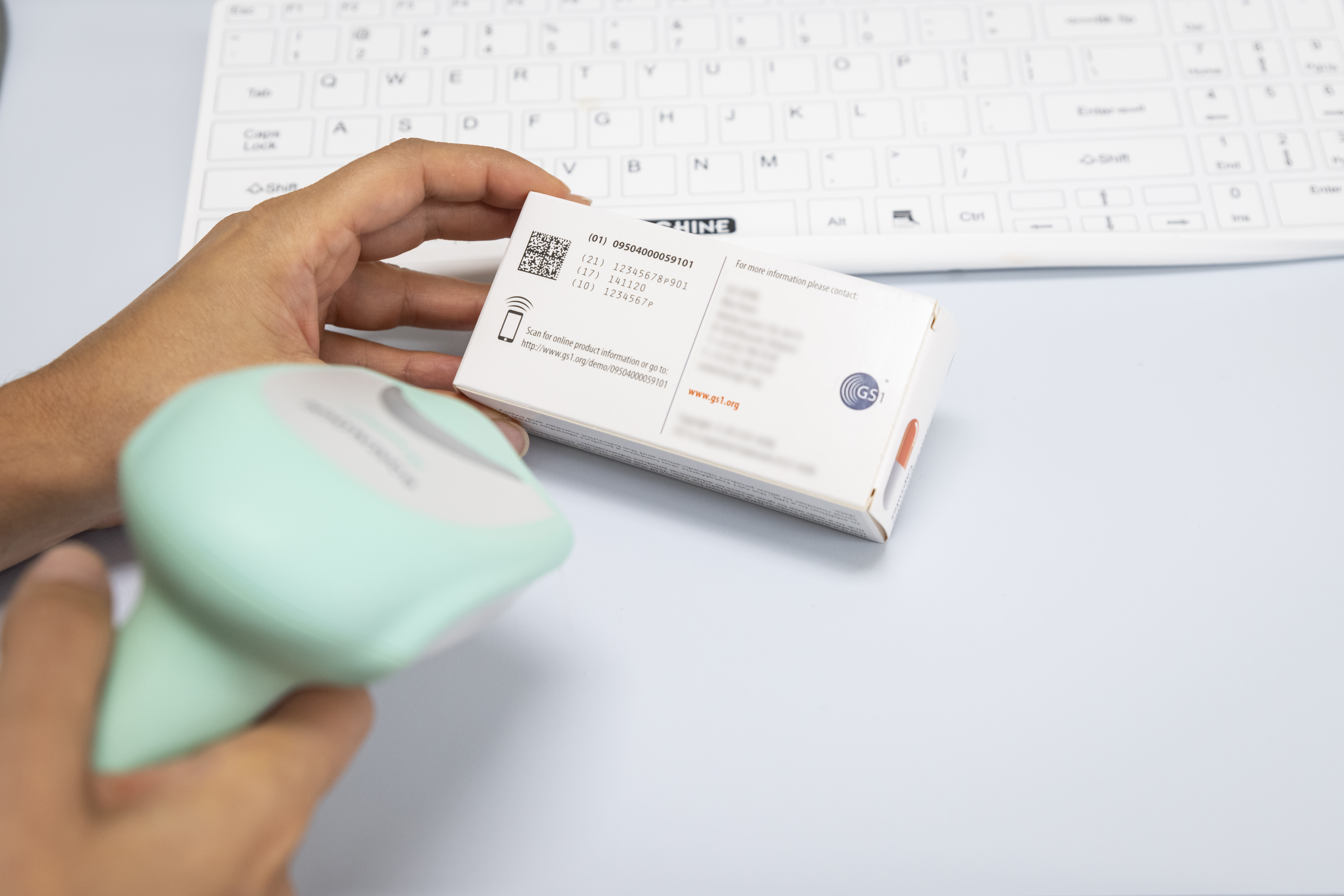 The EU Medical Device Regulation (MDR) and In-vitro Diagnostic Regulation (IVDR)have been adopted on 5 April 2017 and define the requirements for the EU UDI system.
GS1 standards are enabling healthcare manufacturers from around the world, to create and maintain UDI numbers by following the EU Regulations and the GS1 General Specifications. According to the Regulations, a UDI number must be applied to the medical device label, its packaging and, in some cases, the device itself.
 GS1 Standards for UDI in the EU
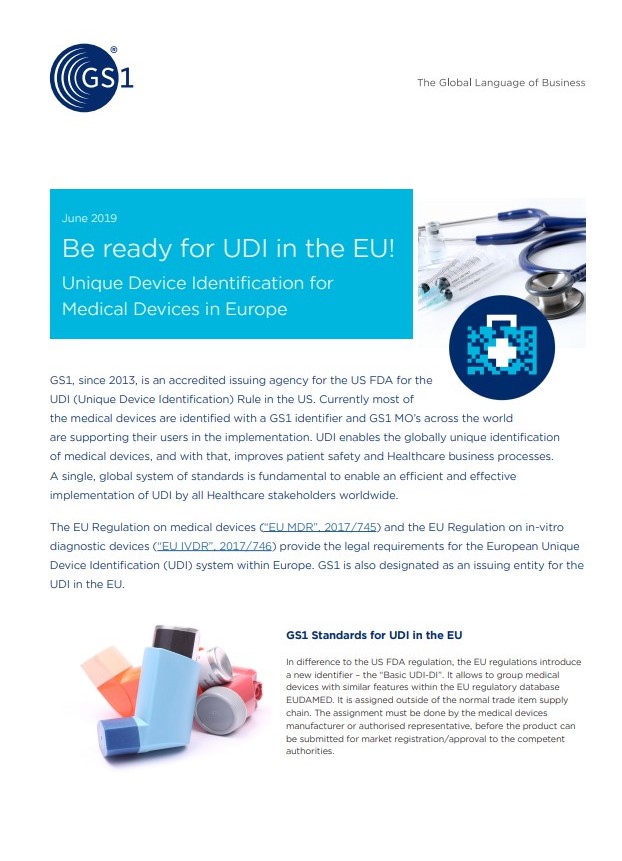
In difference to the US FDA regulation, the EU regulations introduce a new identifier – the “Basic UDI-DI”. It allows to group medical devices with similar features within the EU regulatory database EUDAMED. It is assigned outside of the normal trade item supply chain. The assignment must be done by the medical devices manufacturer or authorised representative, before the product can be submitted for market registration/approval to the competent authorities.
Benefits

The implementation of UDI can enhance patient safety and improve efficiency in the healthcare supply chain. The system is expected to unambiguously identify medical devices throughout the global supply chain by providing precise information for healthcare professionals, thereby providing a secure global supply chain allowing for more accurate reports of adverse events, more effective management of medical device recalls and reduction of medical errors.
The Basic UDI-DI
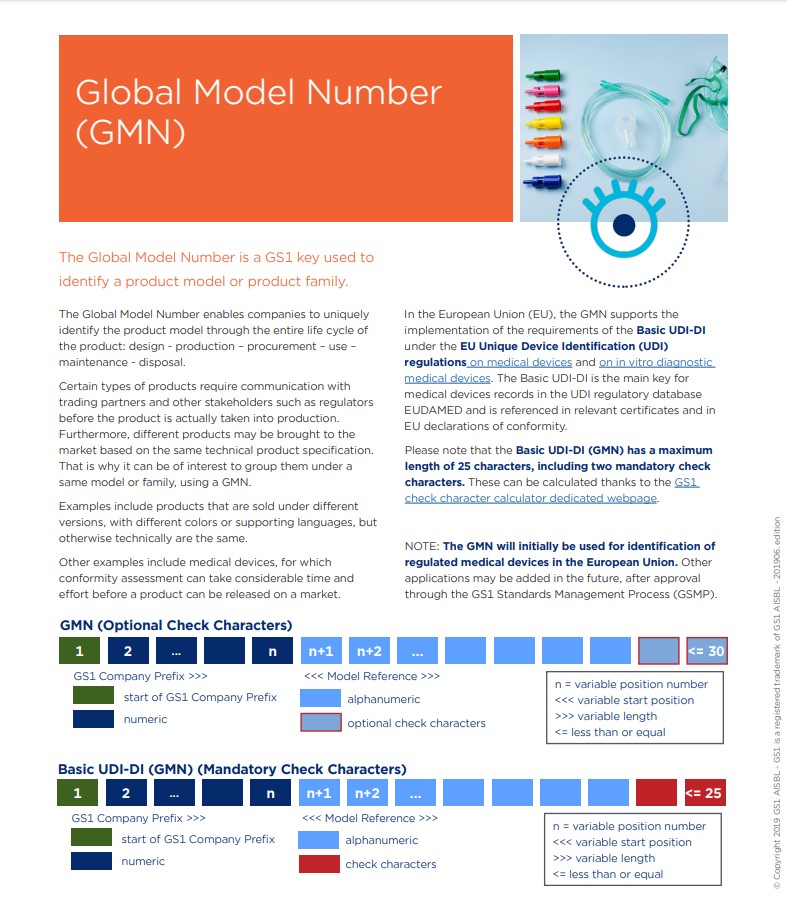 A new concept has been introduced by the EU Regulations: the Basic UDI-DI, that allows to group regulated medical devices within EUDAMED.
GS1 has developed a new key to support the implementation of the Basic UDI-DI: the Global Model Number (GMN).
To calculate the GMN check characters or to verify your GMN (Basic UDI-DI), you can use the tool that GS1 has developed on the GS1 Global Office website.
Do you have a requirement to supply the GTIN for your products to your customers?
We are here to help.
FAQs for Healthcare Manufacturers and Distributors:
Global Trade Item Number is the unique product identifier/barcode found on most medical device, pharmaceutical and retail packages.
As a distributor, the manufacturer or packager will most likely have provided GTINs for their products.
In the case of classified devices, a GS1 Standards can be used to comply with regulatory regulatory requirements, for example, UDI (Unique Device Identification) and FMD (Falsified Medicines Directive).
Added to this, GTINs are increasingly featured as a requirement as a part of tendering processes.
Yes. Single and multiple unit packages, cases and boxes all require a different GTIN.
Each item will have the same GTIN, and each pack will have a different GTIN.
GS1 Global provide a tool Verified by GS1 where you can check the official owner of a GS1 GTIN.
If you require further assistance, please contact us, and we can aid you in engaging with your suppliers.
Barcodes not only identify products- they can also people (GSRNs), places (GLN’s) assets (GIAI’s) and shipments (SSCCs). The use of global standards to uniquely identify these can ensure the delivery of the right products to the right locations, improve throughput efficiencies and facilitate accurate tracking of sales.