Loading...
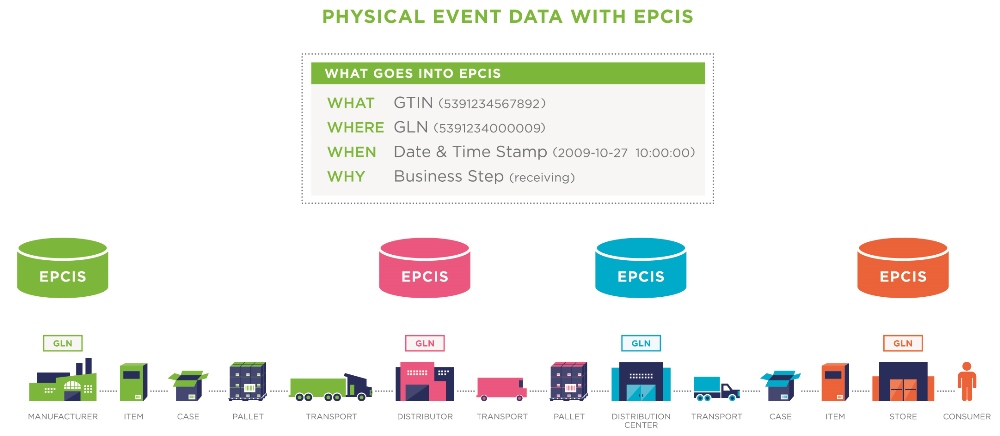
 GS1 standards allow companies and trading partners to use a "common language" to identify items, capture information throughout the supply chain and then to share that information globally. The use of GS1 standards provides answers to the what, where, when, and why of a specific product's movement through the supply chain, enabling true source-to-store visibility.
GS1 standards enable collaboration between trading partners, facilitate an optimised supply chain and more efficient business processes that reduce human error and cut costs.
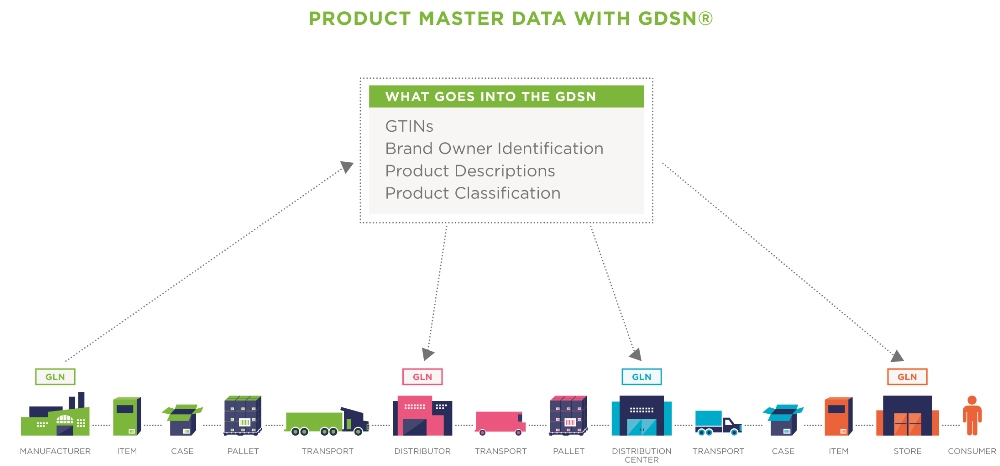
The three elements of GS1 Data Exchange are: Master Data exchange with Data Synchronisation, Transactional Data exchange with Electronic Data Interchange (EDI) and Physical Event Data sharing with EPCIS (Electronic Product Code Information Services).
Master Data
Master Data is the core information about the "who" and "what" in a trading relationship. The "who" can include the name, address and identification codes of the buyer and seller plus details of shipping, delivery and billing locations. The "what" is product information such as product name, description, size and barcode number.
There are 4 key GS1 resources within Master Data:
- The Global Location Number (GLN) Registry
- The GDSN Package Measurement Standards
- The GDSN Data Quality Framework
- The Global Data Synchronisation Network (GDSN)
Transactional Data
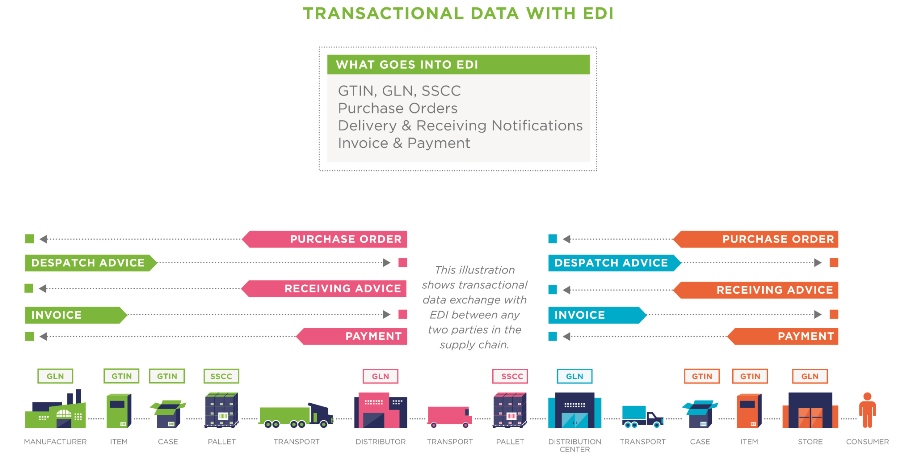
Transactional Data is the information exchanged between two organisations about the products and services they are selling, ordering, delivering, receiving, invoicing and paying for. This process is also known as the Order-to-Cash cycle.
A large number of documents such as orders, despatch dockets and invoices are required for this process to function effectively. However, by replacing these traditional paper-based documents with standardised electronic message equivalents, organisations can realise a range of operational and commercial benefits.
The automation of the order-to-cash cycle and the exchange of electronic business messages directly between the computer systems of two organisations is called EDI (Electronic Data Interchange). Learn more about EDI.
Physical Event Data
Physical Event Data is the information generated by an item as it moves through the supply chain. It includes the what, where, when and status of an object each time the item's RFID tag is read. Physical Event Data Sharing is facilitated by the Electronic Product Code Information Services (EPCIS).
Enabling Visibility
Companies that handle physical goods, such as providers, can benefit from Electronic Product Code Information Services (EPCIS) by cost-effectively sharing information with finer granularity of detail for better visibility and efficiency. EPCIS provides capabilities to improve efficiency, security and visibility in the global supply chain.