- Home
- Industries
- Healthcare
- Manufacturers & Distributors
- Pharmaceuticals
Loading...
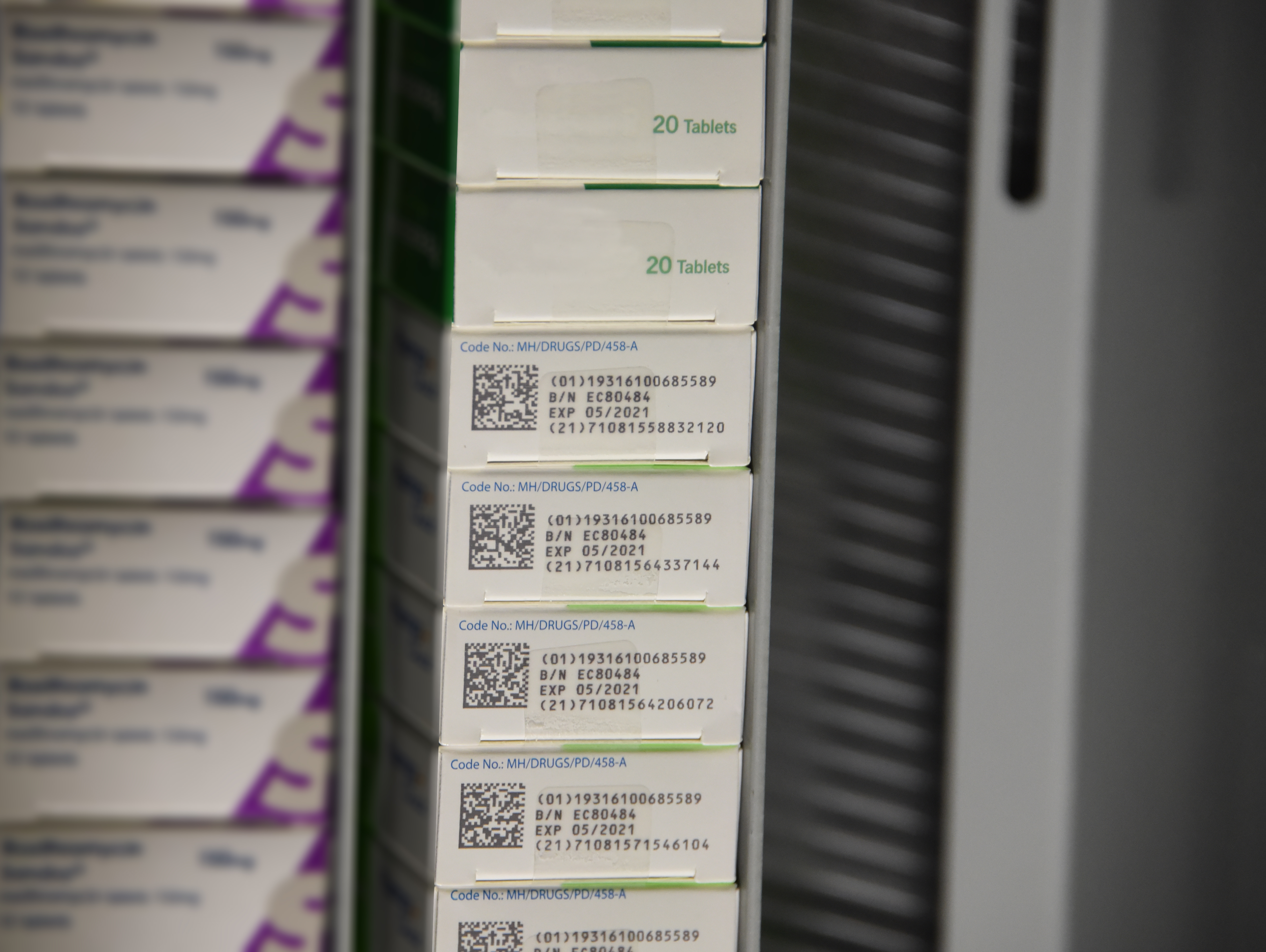
Falsified Medicines Directive 2011/62 (FMD), the European directive on falsified medicines came into force in all European countries from 9 February 2019.
In the pharmaceutical sector, traceability means following each medicine from its production to the patient to ensure its quality and integrity. Automatic identification techniques such as barcodes are increasingly being used to ensure this traceability and to prevent the counterfeiting of medicines.
The EU Falsified Medicines Directive (FMD) which seeks to establish a more secure supply chain for the distribution of prescribed medicines requires the serialisation of patient packs to include a 2D barcode (GS1 Datamatrix) on all patient packs which are to be scanned at the point of dispense for verification purposes.
- The barcode should include the following identifiers: GTIN (Global Trade Item Number), Batch, Expiry Date and Serial Number information encoded in a GS1 Datamatrix in a standardised format using GS1 Application Identifiers (AIs).
- Assigning the GTIN to pharmaceutical products is to be done by the Manufacturer under the Falsified Medicines Directive.
- The FMD (Falsified Medicines Directive) legislation took effect in Europe from 9th Feb 2019. From this date all pharmaceutical medicines are required to have a 2D barcode serialised for each individual medicine pack and this pack is scanned at the point of dispense to decommission the pack from the central repository.
To learn more, please take a moment to explore the GS1 Healthcare GTIN Allocation Rules and their detailed guidance.
GS1 advises on the application of GS1 traceability standards to support adherence to regulatory requirements. Members are responsible for assessing and ensuring compliance with all applicable regulations, which supersede GS1 standards.
Learn more about GS1 Traceability Standards in the Pharmaceutical Industry: